Historical and cultural context
Human footprints in every corner, from the caves to the dry stone, and from the hermitages to the Cartoixa d’Escaladei
The human footprint throughout history
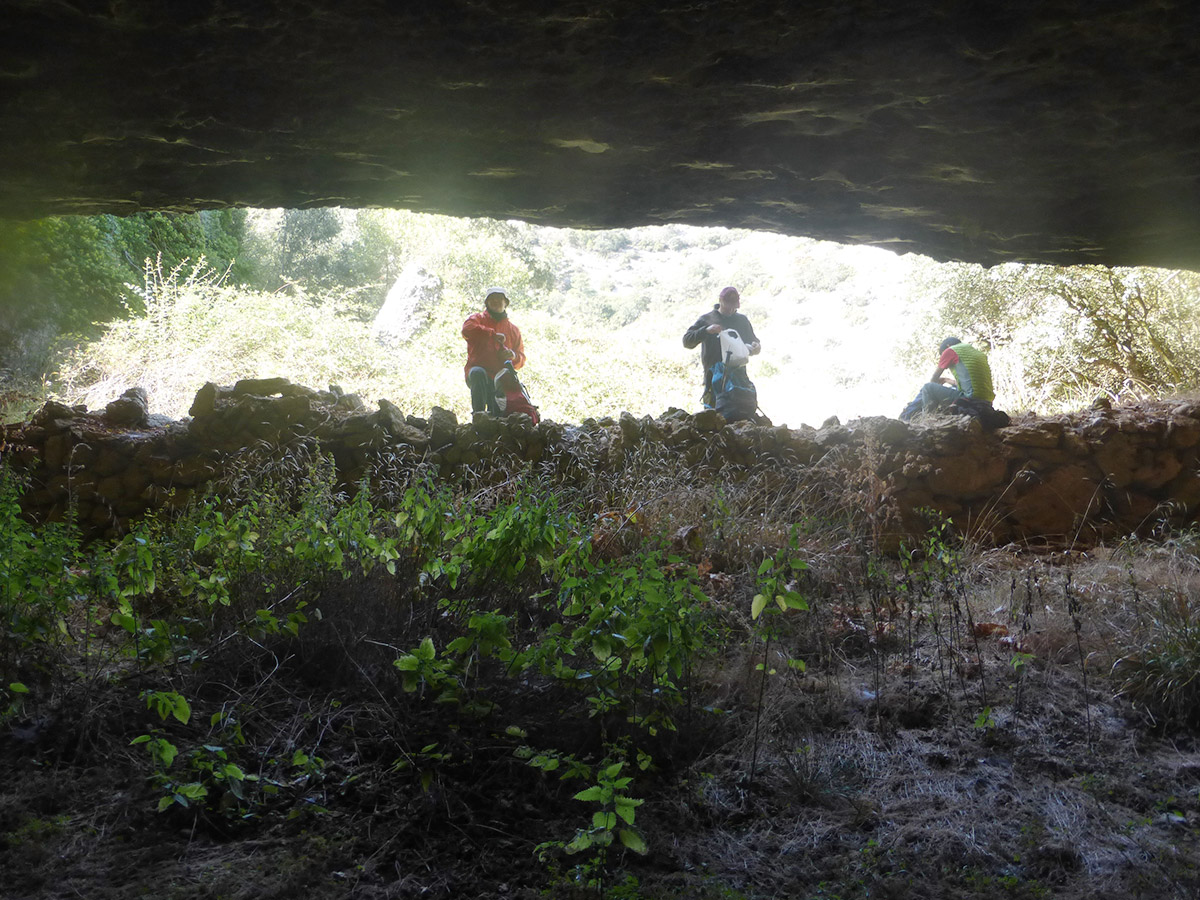
Montsant has an architectural, historical and ethnographic heritage, testimony of the occupation and economic activities that have existed in this area over the centuries. From prehistoric times, through medieval hermitage, to the 18th-19th centuries, when the region experienced its maximum demographic, economic and social expansion, the human presence in Montsant has been constant. Therefore, the landscape of Montsant is a landscape that is the result of human action on the natural environment.
The visible elements that testify to this human footprint in the territory are numerous: farmhouses, mills, popular dry-stone constructions, milestones, ravines, walled caves, etc.
A massif dotted with hermitages
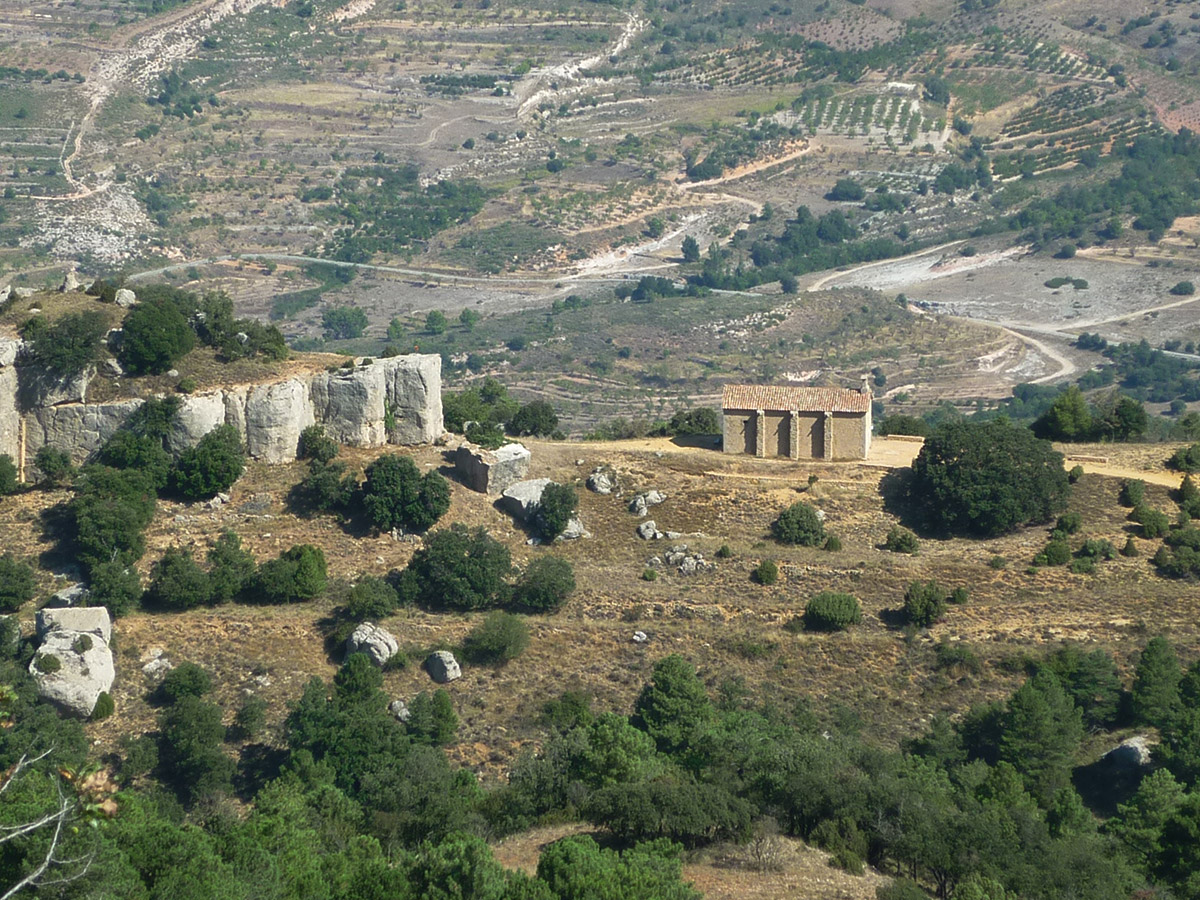
El Montsant is home to several hermitages with a long tradition, such as that of the Mare de Déu del Montsant, at the top of the Sierra Menor, those of San Antoni and Santa Magdalena, on the Ulldemolins side, and that of San Bartolomé, in Romanesque style, in the Fraguerau gorge, that of San Joan del Codolar, on the Cornudella side, still inhabited, and that of the Virgen de la Foia, near Cabacés.
The Escaladei Charterhouse
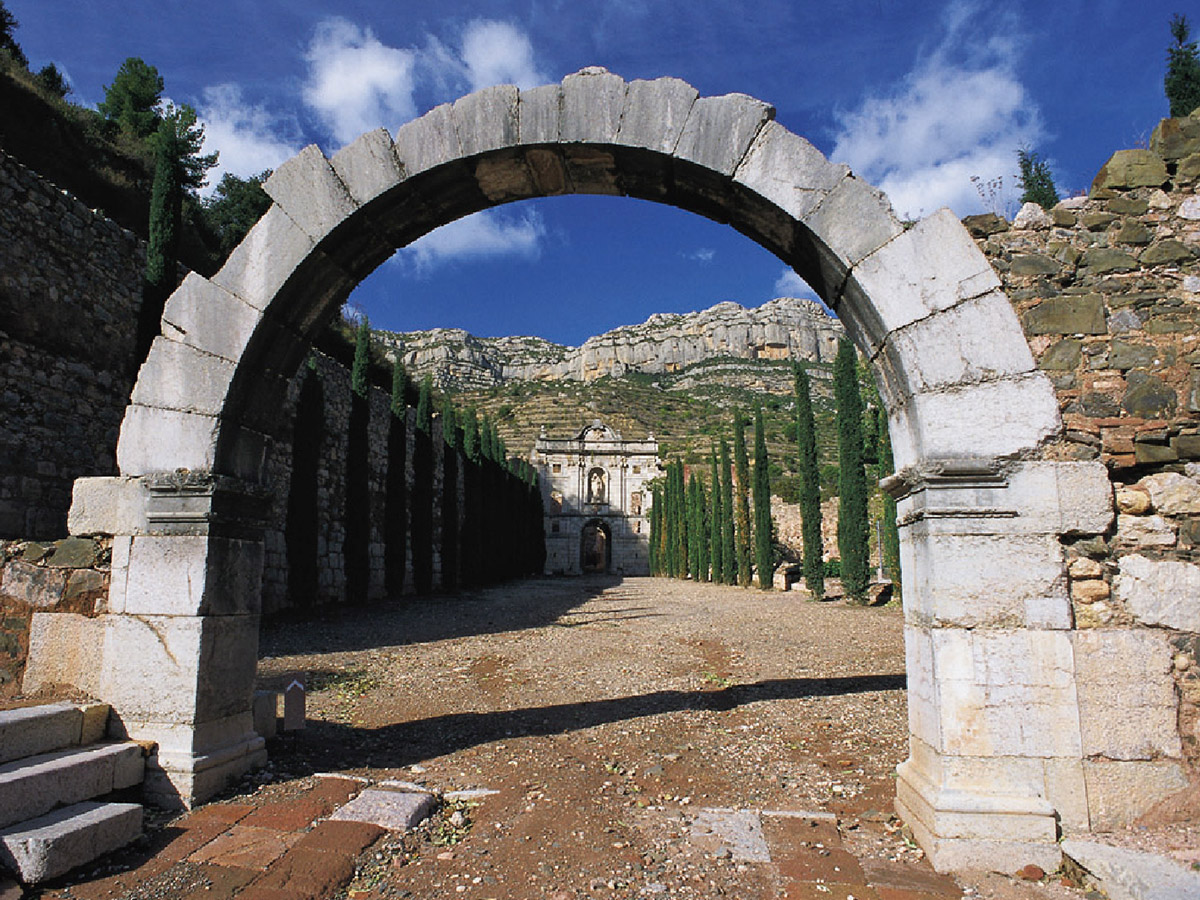
The Escaladei Charterhouse deserves a special mention, the first on the peninsula, founded in the 12th century by Provençal monks, in a place sheltered by the Serra Major, where a shepherd had dreamed of angels going up to heaven by a ladder leaning on the pine’s stump. Hence the name “Scala Dei”. For 7 centuries it exercised enormous power over most of the Region, which takes its name from the Prior who governed the community, not only of religious descent, but also economic and political. In 1835, with the confiscation of Mendizábal, the monks had to flee and the Cartoixa was exposed to looting and plunder. Today we can visit its ruins, in which some rooms have been rebuilt.
The degrees of Montsant
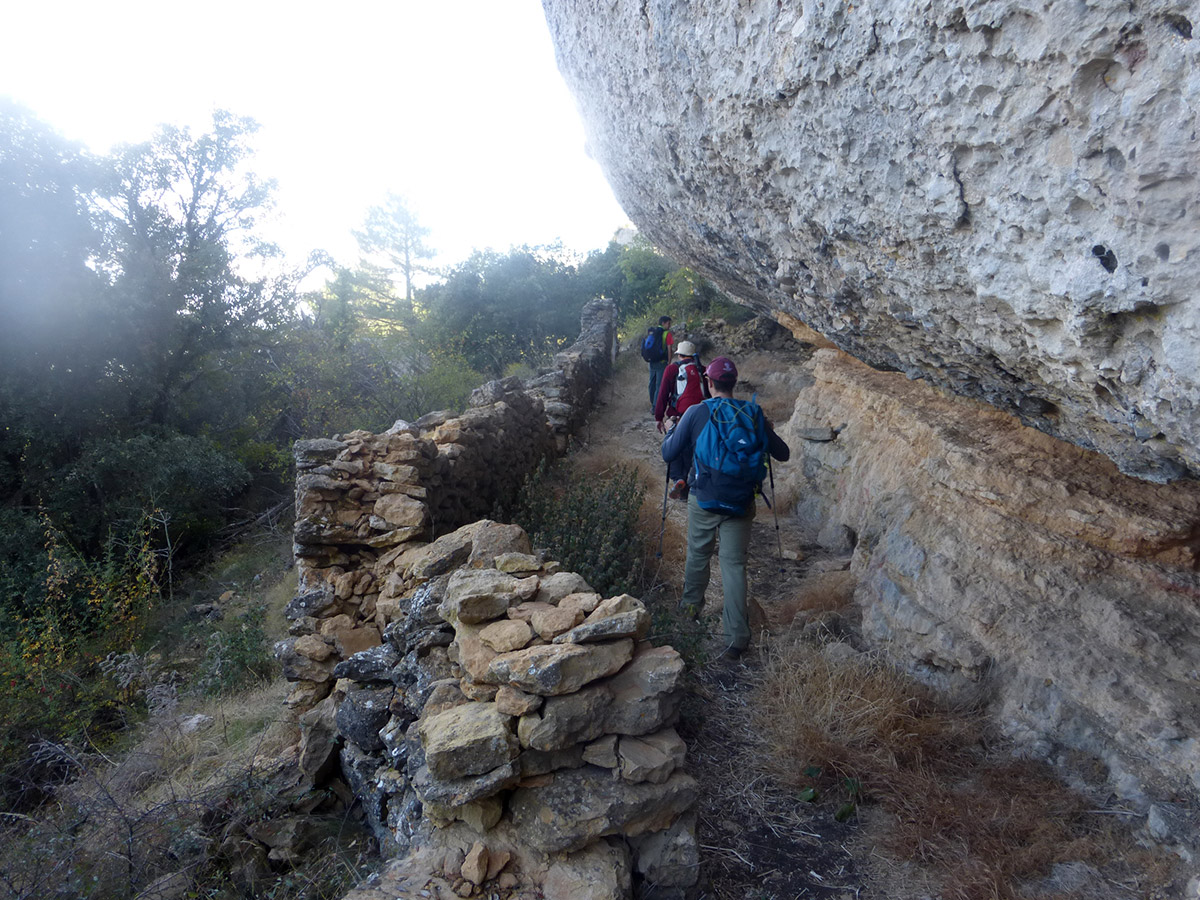
To end this quick review of Montsant, a comment from the mountaineer’s point of view cannot be missing: despite its small dimensions and the impregnable aspect of its cliffs, it is an inexhaustible paradise for hikers. Filled with small paths that go up the cliffs in an unlikely, but safe way, the so-called “graus”, and that, on the other hand, go down deep ravines, in which there is always something worth making a little detour to see: be it a hole, a cave, a corner, etc. Or simply, an equipped or narrow passage, an aerial cornice, an easy climb… Be careful, it’s contagious!!!